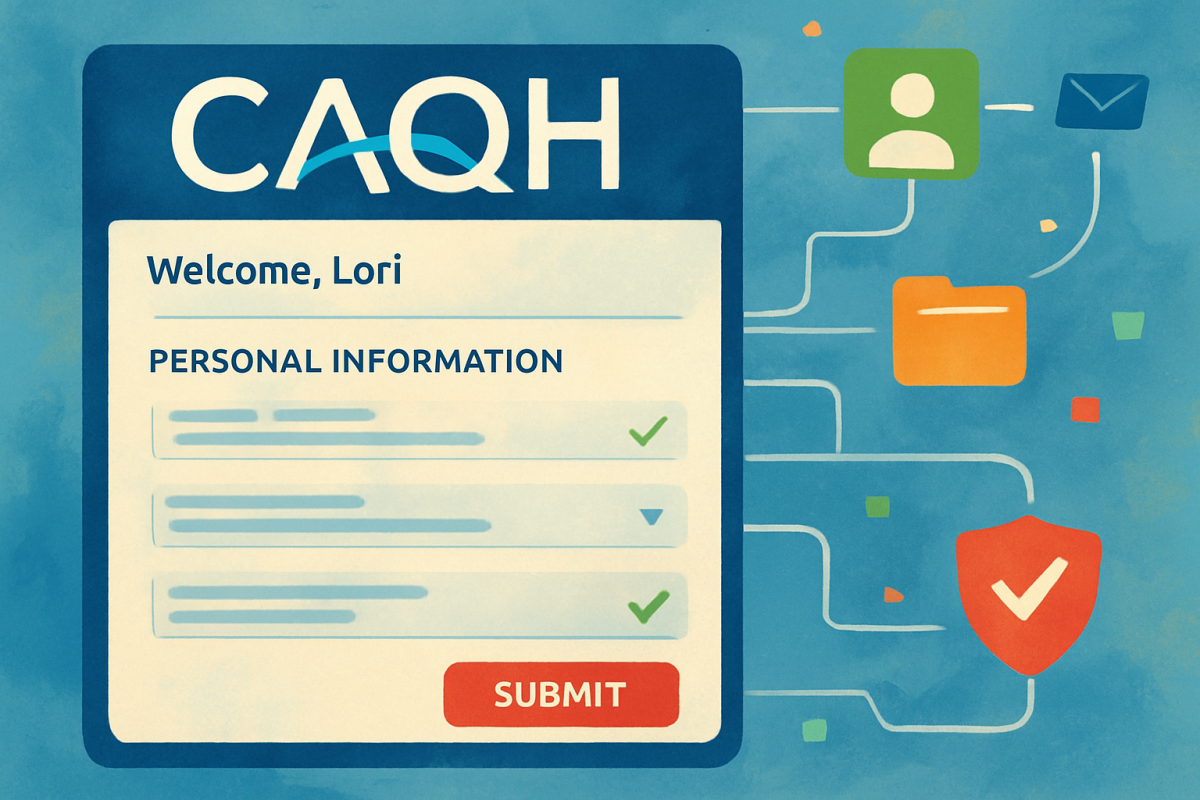
What Is a CAQH Profile?
Here’s what a CAQH is and why it’s important. Your CAQH profile is the centralized record insurance companies use to evaluate you for credentialing and enrollment.
It includes your:
- Personal and practice information
- Education and training
- Work history
- Licenses and certifications
- Malpractice insurance
- Supporting documents
When you apply to a payer, they do not rely only on your application. They pull your data directly from CAQH.
That means your CAQH profile needs to be accurate, complete, and current at all times.
If your CAQH profile is outdated or inconsistent, it can delay the credentialing process, stall enrollment, and impact when you get paid.
Documents Required for CAQH
Before setting up or updating your profile, you will need:
- State licenses
- DEA certificate if applicable
- Board certifications
- Malpractice insurance certificate
- Work history details
- Education and training records
- Practice location information
Missing or expired documents are one of the most common reasons CAQH profiles cause delays.
How to Register for CAQH
To get started, you register through CAQH ProView.
You will:
- Create an account
- Enter your basic provider information
- Receive your CAQH ID
- Begin completing your profile
Some providers are invited by payers to register, while others create a profile proactively.
Either way, once your profile exists, it becomes part of your credentialing process moving forward.
Step by Step CAQH Profile Setup
Setting up your CAQH profile involves completing multiple sections.
These typically include:
- Personal and demographic information
- Professional history
- Education and training
- Licensure and certifications
- Practice locations
- Malpractice coverage
Each section must be complete and consistent.
Small inconsistencies, such as mismatched dates or missing details, can trigger delays when payers review your file.
Attesting Your CAQH Profile
Once your profile is complete, you must attest to it.
Attestation confirms that your information is accurate.
CAQH requires providers to re attest every 120 days.
If you do not re attest:
- Your profile becomes inactive
- Payers may stop processing applications
- Credentialing can be delayed
- Claims may be affected
Many providers do not realize their profile is inactive until it impacts billing.
Granting Payer Access to Your Profile
Completing your profile is not enough. You also need to grant access to each payer.
This requires:
- Selecting the payer in CAQH
- Authorizing them to view your profile
- Ensuring your documents are visible
If access is not granted, the payer cannot review your application, even if everything else is complete.
Updating and Maintaining Your CAQH Profile
This is where most providers run into issues.
CAQH is not a one time task. It requires ongoing maintenance.
You need to:
- Re attest every 120 days
- Update licenses and documents before they expire
- Keep work history current
- Ensure consistency across all sections
Payers expect CAQH to reflect your current status at all times because they rely on it directly.
An outdated profile can:
- Delay credentialing
- Trigger additional requests
- Pause enrollment
- Lead to claim denials
Common CAQH Errors That Delay Credentialing
Some of the most common problems include:
- Missing or expired documents
- Inconsistent information across sections
- Gaps in work history
- Failure to re attest every 120 days
- Not granting payer access
- Profiles that have not been reviewed in months
These issues are often discovered only after an application is submitted, which adds time to an already long process.
Why CAQH Maintenance Matters More Than Setup
Many providers think CAQH is something you complete once and move on.
In reality, most practices already have a profile. The issue is keeping it accurate over time.
Because payers pull directly from CAQH:
- Errors follow you into every application
- Outdated data slows every payer
- Inactive profiles stop progress entirely
CAQH is not just an application. It is an active part of your revenue cycle.
How Pie Health Manages CAQH for You
At Pie Health, we focus on ongoing CAQH management, not just initial setup.
Most of our clients already have a profile. The challenge is keeping it aligned with payer expectations.
We manage CAQH as part of our enrollment operations, which includes:
- Monitoring your 120 day re attestation cycle
- Keeping your profile active and current
- Updating documents and licenses before they expire
- Reconciling CAQH data with payer applications and portals
- Identifying issues before they delay credentialing or billing
As payers rely more heavily on CAQH, the margin for error is smaller.
Profiles that are inactive or inconsistent can lead to:
- Delayed credentialing
- Enrollment interruptions
- Claim denials
If your CAQH profile has not been reviewed recently or is being managed manually, there is a good chance it is creating risk without you realizing it.
The goal is not just to complete CAQH. It is to keep it accurate so credentialing and billing can move forward without unnecessary delays.
Final Takeaway
Your CAQH profile is one of the most important pieces of your credentialing process.
When it is complete and maintained:
- Applications move forward
- Payers can review your data without delays
- Providers become billable sooner
When it is not:
- Credentialing slows down
- Enrollment stalls
- Revenue is delayed
If you are not sure whether your CAQH profile is up to date, or if you have experienced delays with credentialing, it may be time to review it more closely.
Book a consultation with pie Health →
Pie Health helps practices manage CAQH so profiles stay current and credentialing stays on track.