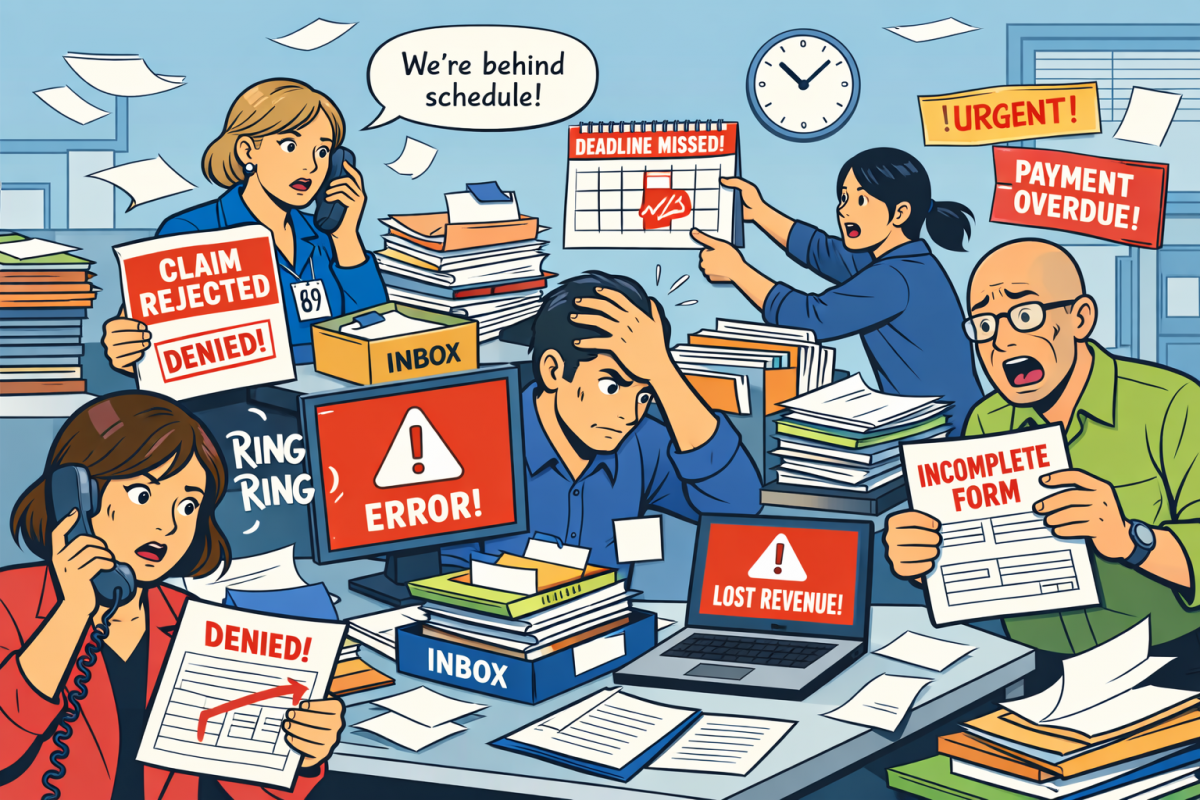
Being in network is not a one time win. It is something you have to keep earning, across multiple payors, for every provider and location. When there is no real structure around credentialing, that reality shows up as constant credentialing surprises: denials you did not expect, patients told you are out of network, and last minute rushes when a license or recredentialing date sneaks up on you. It does not have to work that way.
How credentialing surprises usually show up
Most practices know this pattern.
- A provider moves or adds a location, and months later you discover only some payors were updated, so claims start denying for the new site.
- A recredentialing or revalidation notice is missed, and the first clue is a batch of denials or a letter saying participation has lapsed.
- CAQH or similar profiles are out of date, and multiple payors quietly stall or deny until they are fixed.
- A provider is technically approved, but directories are wrong, so patients or referring offices are told you are out of network.
Each of these by itself is annoying. When they overlap, your team spends more time reacting than running the practice.
Why they keep happening
Credentialing surprises are not usually about people not caring. They are about the way credentialing is handled.
Common patterns:
- No single source of truth for which providers are enrolled with which payors, under which tax IDs and locations
- Heavy reliance on spreadsheets, email threads, and individual memory instead of a system that holds the history
- Credentialing treated as a project you revisit a few times a year instead of something you maintain continuously
- CAQH and similar profiles updated only when an application bounces, not as part of a routine cadence
In that setup, small misses add up until they turn into real problems.
What it looks like when staying in network is boring
The goal is not to make credentialing exciting. The goal is to make it predictable.
For most practices, that means a few simple, strict habits:
- Keep one current list of providers, locations, tax IDs, NPIs, and payors that everyone uses.
- Track effective dates, recredentialing dates, and license expirations in one place, tied to each payor.
- Treat CAQH and similar profiles as live data sources that get updated and attested on a regular schedule, not just when something breaks.
- Confirm directory listings and network status periodically instead of waiting for a patient or biller to tell you something is wrong.
When that is in place, most credentialing “emergencies” turn into routine tasks handled before they show up in your A/R.
Who owns this work
Someone has to own staying in network. That can be:
- An internal team with clear responsibility, tools, and time to do it, or
- A partner whose entire job is to manage credentialing, enrollment, and maintenance with a defined process and reporting rhythm.
What does not work well is splitting it across multiple roles as a side project with no shared system. That is how you end up learning about problems from denials or patient calls instead of from your own data.
What practices actually get back
When staying in network stops being a stream of credentialing surprises, practices usually see:
- Fewer credentialing related denials and less time spent on rework and appeals
- Clearer cash flow, because approvals, effective dates, and renewals are tracked and planned instead of guessed
- Less stress on front desk and billing staff, who are not left explaining network surprises they did not cause
It does not remove all of the friction payors create. It just means you are not adding your own avoidable friction on top.
If your first clue that something is wrong is still coming from denials or patient calls, it may be time to put more structure around credentialing, whether that means building it internally or asking a partner like pie to handle it with you so staying in network becomes routine instead of surprising.